

At the India AI Impact Summit 2026 in New Delhi, India did not just host another technology conference. It made a statement. The message was clear: India wants to move from being a large consumer of digital tools to becoming a global force in artificial intelligence.
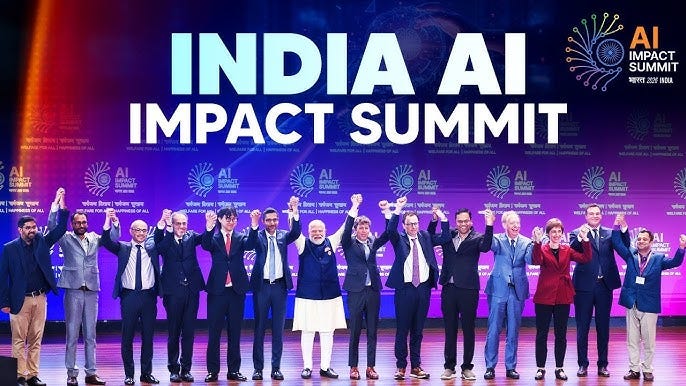
The scale of the announcements reflected that ambition.
Indian conglomerates and global technology firms together pledged investments worth hundreds of billions of dollars in AI infrastructure and compute capacity. Reliance Jio unveiled a ₹10 trillion sovereign AI initiative, anchored by large data centres in Jamnagar and a nationwide push to expand affordable AI services. Adani Group followed with a $100 billion commitment toward green-powered data centres, signalling that the AI race will also be an energy race.
Global players reinforced the message. Microsoft committed billions toward hyperscale infrastructure and large-scale skilling efforts in India. OpenAI partnered with the Tata Group to expand compute capacity and integrate ChatGPT Enterprise across Tata companies. Indian firms such as Tata Consultancy Services, Yotta Data Services, and Larsen & Toubro announced significant investments in GPUs and AI infrastructure, pushing India’s subsidised compute capacity to new highs.
On paper, the numbers are staggering. But infrastructure alone does not define technological leadership. Sovereignty does.
One of the summit’s most significant themes was the push for homegrown AI models. Under the IndiaAI Mission, BharatGen introduced Param2, a multilingual model trained across 22 Indian languages. Sarvam AI launched voice-first systems designed to better understand Indian speech and linguistic diversity. Platforms such as MahaGPT are already being deployed within Maharashtra’s public services.
This signals a shift. For years, AI development was concentrated in a handful of global technology hubs. India’s effort suggests a new model: AI built on local data, tailored to local governance needs, and capable of serving citizens in their own languages.
The summit also carried a strong geopolitical undertone. The AI Impact Declaration, endorsed by 91 nations, positioned AI as a shared global resource rather than an exclusive advantage of a few advanced economies. Prime Minister Narendra Modi articulated a vision of “Design in India, Deliver to Humanity,” while leaders such as Emmanuel Macron and António Guterres emphasised sovereign capability and global cooperation. Sundar Pichai pointed to practical examples of AI being deployed for public good.
Yet, amid the optimism, difficult questions remain. Can India ensure reliable power for energy-intensive data centres? Will policy frameworks keep pace with rapid technological expansion? Can talent be retained at scale? And perhaps most importantly, can AI be deployed responsibly, with safeguards against deepfakes, misinformation, and risks to children.
The summit was a moment of ambition. It demonstrated financial muscle, political will, and international alignment. The next phase will demand something more complex: execution.
If India can translate these pledges into functioning infrastructure, effective regulation, and inclusive innovation, it may not only transform its own digital economy. It could redefine what AI leadership looks like for the Global South.
Total Infrastructure Pledges Top $250 Billion
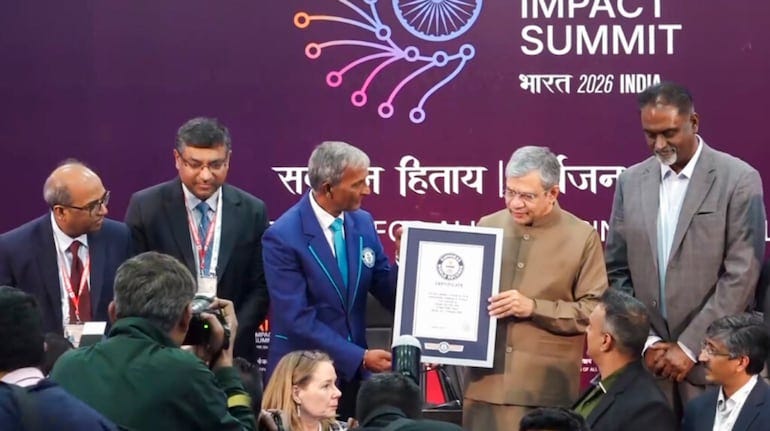
The India AI Impact Summit 2026 secured over $250 billion in infrastructure-related investments and nearly $20 billion in deep-tech venture capital, as announced by Union Minister Ashwini Vaishnaw, marking a major win for India’s AI ambitions with participation from over 500,000 visitors.
Reliance Jio’s $110 Billion AI Compute Push
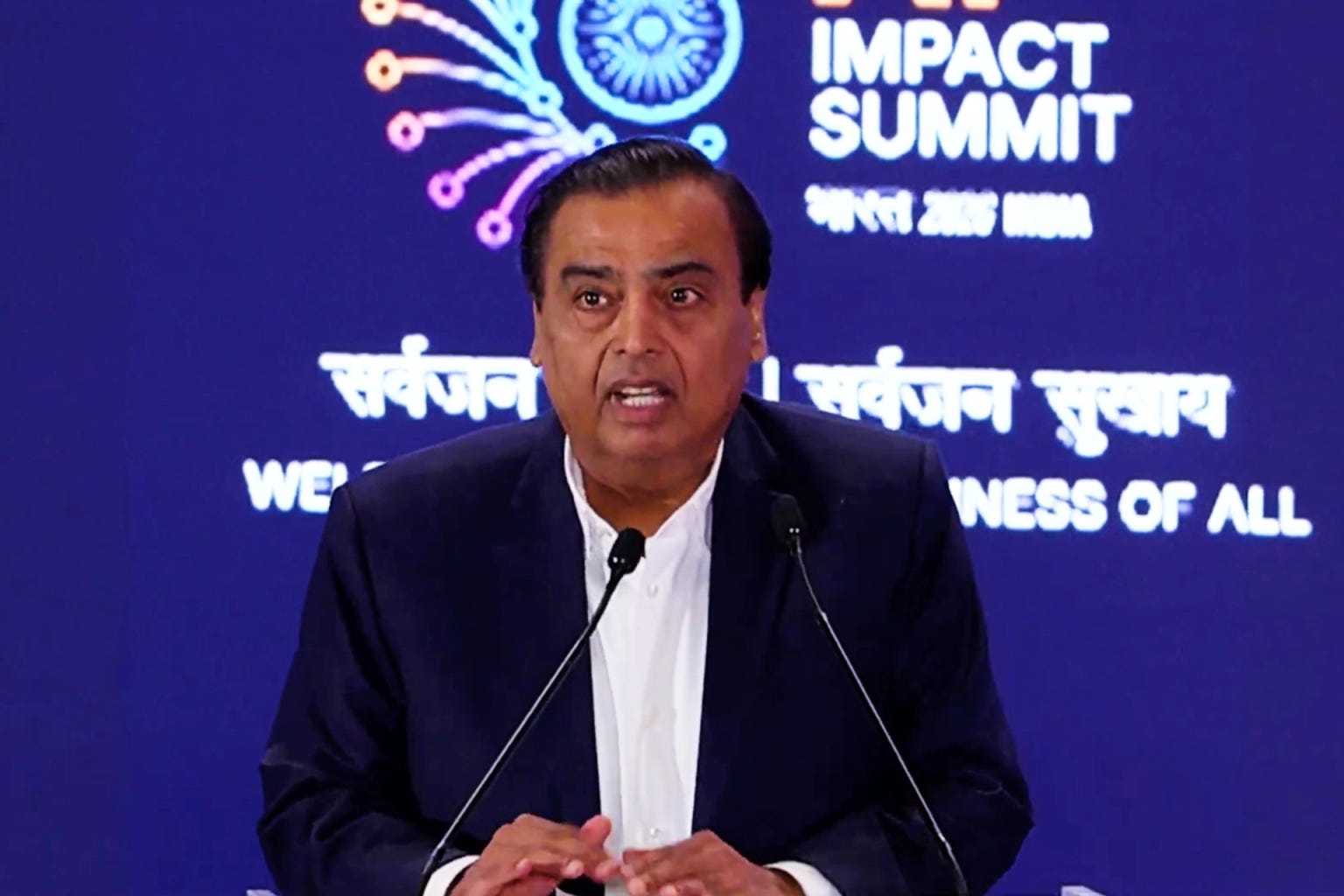
Mukesh Ambani’s Reliance Industries and Jio pledged ₹10 trillion ($110 billion) for sovereign AI infrastructure, including multi-gigawatt data centers in Jamnagar (120 MW online in 2026), nationwide edge computing, and integrated AI services to cut compute costs and ensure self-reliance.
Adani’s $100 Billion Green AI Data Centers
Adani Group committed $100 billion by 2035 for renewable-powered AI data centers, projecting an additional $150 billion in manufacturing, electrical infrastructure, and sovereign cloud, creating a $250 billion AI ecosystem; partnerships with Google and Microsoft already underway.
OpenAI-Tata Partnership for 1 GW Capacity
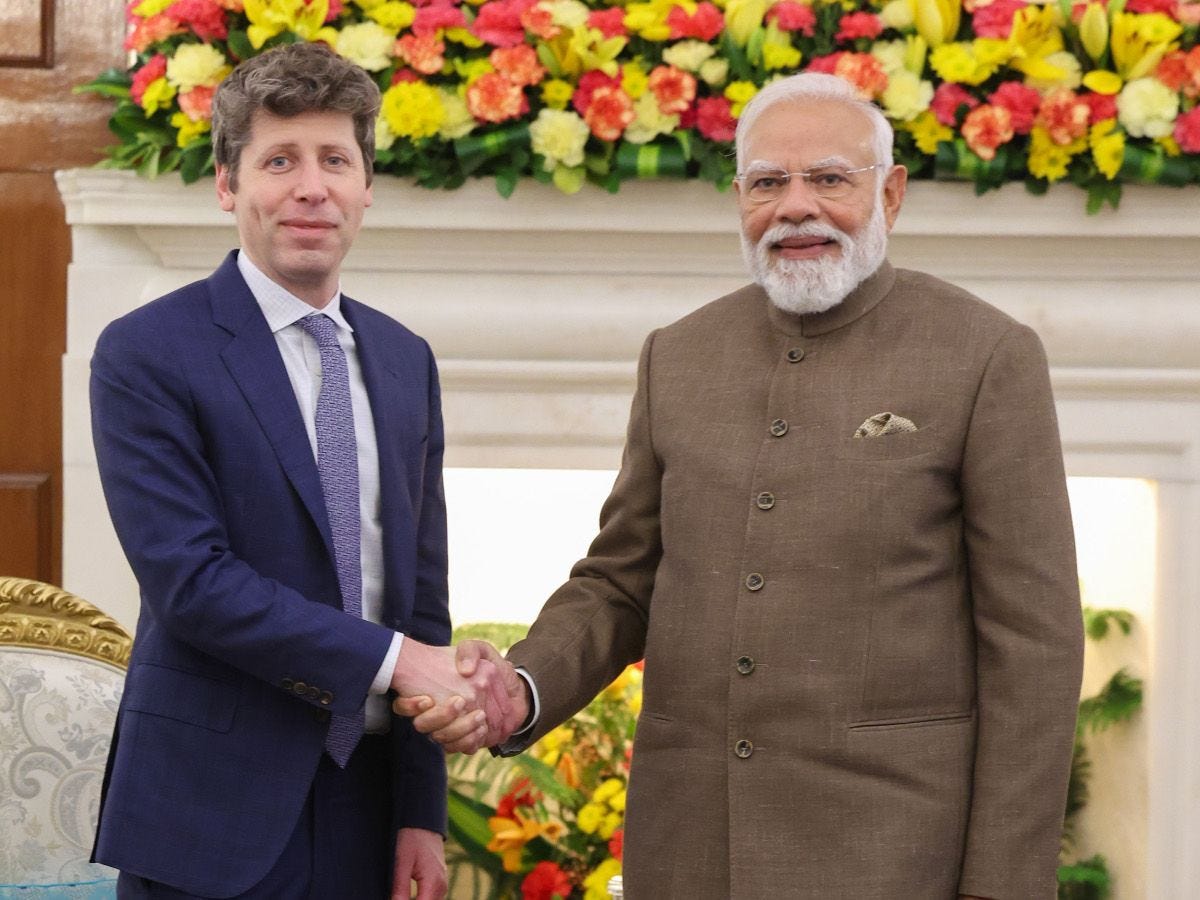
OpenAI partnered with Tata Group under its $500 billion Stargate project for 100 MW AI infrastructure scalable to 1 GW, plus deploying ChatGPT Enterprise across Tata subsidiaries to build AI capabilities for India.
Infosys-Anthropic Enterprise AI Agents
Infosys collaborated with Anthropic to integrate Claude models into its Topaz platform, creating “agentic” AI systems for telecom, finance, manufacturing; includes a dedicated Center of Excellence starting in telecom.
Microsoft Boosts Global South AI with $50 Billion
Microsoft pledged $50 billion in AI for the Global South by decade’s end, plus separate $17.5 billion (2026-2029) in India for hyperscale data centers, skilling 20 million, and AI integration in e-Shram/NCS platforms.
IIT Bombay’s BharatGen unveils 17B parameter sovereign multilingual AI model at India AI Impact Summit
India unveiled homegrown sovereign AI models including BharatGen’s Param2 (17B multilingual MoE model for 22 Indian languages led by IIT Bombay), Sarvam AI’s voice-first Sarvam Vision and Bulbul V3 (under IndiaAI Mission), Gnani.ai, and MahaGPT (live for Maharashtra govt urban/revenue use), reducing reliance on Big Tech.
Dr. Jitendra Singh Hails BharatGen as India’s First Sovereign Government-Owned Large Language Model
At a session in Bharat Mandapam, Union Minister Jitendra Singh said Artificial Intelligence is now essential across sectors and hailed BharatGen as India’s first government-owned sovereign Large Language Model.
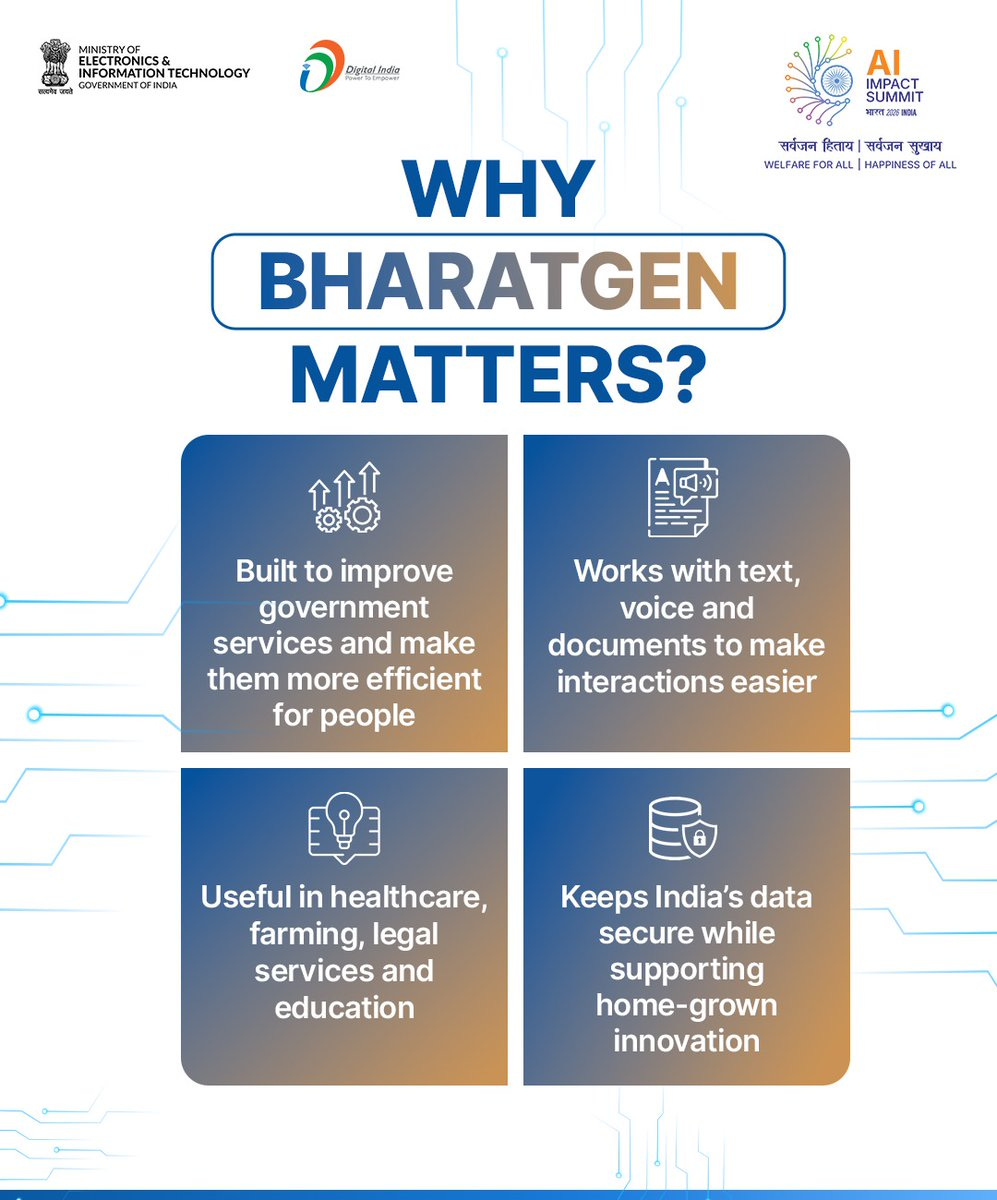
Backed by the India AI Mission and NM-ICPS funding, BharatGen has launched multilingual foundation models, including Param-2 in 22 scheduled Indian languages, marking a significant step toward AI sovereignty and inclusive digital infrastructure.
Sarvam AI launches made-in-India foundational AI models, takes first step towards competing with ChatGPT
Bengaluru-based startup Sarvam AI has launched Sarvam-30B and Sarvam-105B at the AI Impact Summit 2026, marking a significant step toward building India’s own foundational AI models to rival global systems. Designed for multilingual, enterprise, and reasoning tasks, the models aim to make advanced AI more accessible, cost-effective, and locally relevant for Indian users and businesses.
BharatGen ties up with Parag Naik’s Semiconductor Venture for Sovereign AI Hardware
Sampige Semiconductors Private Limited has signed an MoU with BharatGen Technology Foundation to co-develop India-centric AI chipsets, hardware-aware models, and a unified software stack under the Make in India vision.
Yotta’s $2 Billion Nvidia GPU Hub
Yotta Data Services committed $2 billion to deploy Nvidia high-end AI chips for a new computing hub, following 10,000 GPUs already deployed.
#DataDaan - Donate for a Digital India

Aligned with the IndiaAI Mission and MeitY’s efforts to ensure the availability of AI-usable data, the #DataDaan campaign by AI4India is now live on DataDaan.org. This initiative invites individuals and organizations to contribute valuable datasets, enriching India’s AI ecosystem and driving innovation across sectors. The platform provides a streamlined process for data contribution, ensuring responsible and impactful AI development. Visit DataDaan.org to explore the initiative and be part of this transformative effort.
NOTE: The views expressed by the authors are their own. AI4India as a forum does not endorse any comments on specific brands, products, platforms or companies.
Join our AI4India.org forum to be a part of the AI revolution in India by visiting our site now.
Follow us on our X and LinkedIn to receive interesting updates and analysis of AI-related news